I lost 12.6 kg in four months, going from 100.1 kg in May to 87.5 kg in September. No GLP-1s. The method has four parts: smart scale + smartwatch + calorie and macro tracking + walking. I use a Withings scale, a Google Fitbit Air to track activity, and OpenClaw to log my food. You can also track calories directly in Google Health.
These photos are from April and September. The weight loss above is from my May to September weigh-ins.
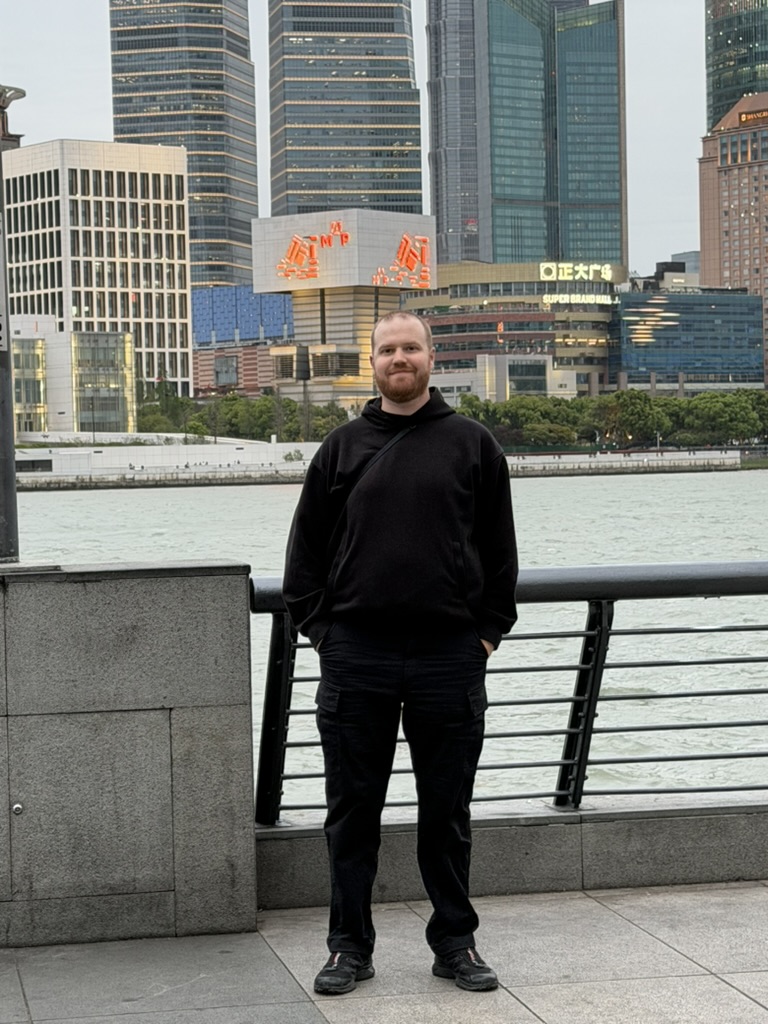

The biggest help was making it easy to keep track. I could see what I was eating, how much I was moving, and whether my weight was heading in the right direction.
Smart scale
Weigh in each morning. Watch the trend.
Smartwatch
Track daily activity. I use a Fitbit Air.
Calories and macros
Track calories and macros with OpenClaw or directly in Google Health.
Walking
Walk to work or the shops. Make it part of the day.
Build a routine you can keep doing.
Weigh in, then get on with your day
I use a Withings smart scale each morning. It saves the reading automatically, so there’s nothing to type in or remember.
I care about the trend over a few weeks. A heavier morning doesn’t mean the plan has stopped working. Water and yesterday’s food can move the number around.
Log everything with OpenClaw
I use OpenClaw to count calories and track macros: protein, carbs and fat. Every meal goes in. Home cooking, restaurant meals, snacks, beers at the pub. It’s much easier to keep doing when logging is just another message.
The requests can be this short:
Send what you’re looking at and say what you ate. A photo of the meal or a packet’s nutrition label works too.
I prefer this to a calorie app because I can choose a capable model and have it search restaurant websites for nutrition information. It can account for the extra chicken, reuse yesterday’s meal and keep calories and protein together. My setup saves the food log to Google Health.
You can also log food through the AI coach in the Google Health app, formerly Fitbit. With Google Health Premium, send a message or meal photo to track your calories there. I prefer OpenClaw, but you don’t need my setup to get started.
I ask it to use the restaurant’s figures or the label first, and estimate when those aren’t available. I still check the portion and extras. A photo won’t tell it how much oil went into dinner.
Change meals you already enjoy
I didn’t overhaul what I ate. I still had takeaway. I made swaps like KFC to GYG, and chose no chips or small chips instead of a large.
All good things in moderation. I could keep enjoying my food and bring the calories down without starting a completely different diet.
I keep protein in view too. Higher protein intake and resistance training can help preserve lean mass while losing weight. Asking OpenClaw to track protein alongside calories makes it easier to spot meals that need adjusting.
The basic idea is calories in versus calories out. 7,700 calories per kilogram is a rough rule, not a deadline. Your energy needs change as you lose weight, and the scale also reflects water and other tissue. That’s why real weight loss doesn’t follow a straight line.
Walk more often
For the smartwatch part, I use a Google Fitbit Air to track my activity. My steps and distance show up in the Google Health app.
Walking to work or the shops makes movement part of something I was going to do anyway. It adds up.
30 August–28 September 2026 · Fitbit
438,757steps recorded
14,625average per day
332.2 kmFitbit distance
Daily steps
| Date | Steps |
|---|---|
| 2026-08-30 | 8,441 |
| 2026-08-31 | 12,455 |
| 2026-09-01 | 12,274 |
| 2026-09-02 | 17,094 |
| 2026-09-03 | 18,378 |
| 2026-09-04 | 17,112 |
| 2026-09-05 | 7,376 |
| 2026-09-06 | 7,995 |
| 2026-09-07 | 14,320 |
| 2026-09-08 | 10,054 |
| 2026-09-09 | 17,724 |
| 2026-09-10 | 7,561 |
| 2026-09-11 | 20,290 |
| 2026-09-12 | 6,267 |
| 2026-09-13 | 13,558 |
| 2026-09-14 | 17,416 |
| 2026-09-15 | 7,539 |
| 2026-09-16 | 17,812 |
| 2026-09-17 | 16,473 |
| 2026-09-18 | 12,628 |
| 2026-09-19 | 24,553 |
| 2026-09-20 | 17,091 |
| 2026-09-21 | 13,705 |
| 2026-09-22 | 11,479 |
| 2026-09-23 | 19,001 |
| 2026-09-24 | 21,110 |
| 2026-09-25 | 14,597 |
| 2026-09-26 | 20,192 |
| 2026-09-27 | 15,120 |
| 2026-09-28 | 19,142 |
You don’t need to copy my step count. Look at what you do now and find a walk you can fit into your day.
Get help choosing supplements
I took a multivitamin and omega-3.
Plenty of multivitamins were a poor fit for my diet. I use the agent to compare labels at a local retailer: what’s in each one, how much, and what it costs per day. For omega-3, check the EPA and DHA amounts, not just the big fish-oil number on the front.
See how small changes add up
Try your usual activity, a smaller food intake and some extra walking below. It’s a rough guide to the size of a change, not a promise about what you’ll weigh.
Explore the method
What could small changes add up to?
Try your own numbers. This is a rough estimate, not a personalised calorie target. Your entries stay in this page.
For adults only. Not for pregnancy, breastfeeding, underweight or eating-disorder recovery. Use individual clinical advice where those apply.
4.7 kg over 12 weeks
Weight-change equivalent, not predicted fat lossResting estimate1,855kcal/day
Usual maintenance estimate2,226kcal/day, includes usual activity
Additional walking166net kcal/day at the start
Scenario intake1,926kcal/day, held constant
Starting deficit: 466 kcal/day in this scenario.
Weekly values
| Week | kg |
|---|---|
| 0 | 90.0 |
| 1 | 89.6 |
| 2 | 89.2 |
| 3 | 88.8 |
| 4 | 88.3 |
| 5 | 87.9 |
| 6 | 87.5 |
| 7 | 87.2 |
| 8 | 86.8 |
| 9 | 86.4 |
| 10 | 86.0 |
| 11 | 85.6 |
| 12 | 85.3 |
How this is calculated
Resting kcal/day = 10 × kg + 6.25 × height in cm − 5 × age + 5 for the male coefficient, or −161 for the female coefficient. Maintenance = resting estimate × your chosen activity factor. The activity factors are rough scenario assumptions, not measured expenditure.
Step length is estimated as 41% of height, a rough midpoint of Omron’s 37–45% range. Extra distance = additional steps × estimated step length. Net level-walking energy ≈ 0.5 kcal × kg × extra kilometres, above resting energy. This uses the level-ground term of the ACSM walking equation; it assumes ordinary, steady walking, roughly 3–6 km/h. Hills, pace, gait and device error change the result.
The model subtracts each day's estimated deficit ÷ 7,700 from weight, then recalculates resting and walking energy at that weight. Intake stays fixed. It does not model adaptive thermogenesis, changes in appetite or adherence, water, glycogen or lean tissue. Updating weight does not make it a validated dynamic physiological model.
Food reductions up to 1,500 kcal/day can be explored. No output is shown for intake below 1,200 kcal/day or a trajectory below BMI 18.5. These display limits do not make a scenario a recommended target.
Sources: Mifflin–St Jeor, walking-energy equation, Hall's dynamic weight-change research. For a more detailed physiological model, use the NIDDK Body Weight Planner.
Start by logging what you already eat. Weigh yourself regularly, find a walk you enjoy, and make one food change you can keep doing. Give it a few weeks, then look at the trend.